
So in Journey to the West there’s basically four crazy powerful celestial primates that do not belong under any of the classical categorizations of gods, spirits, demons or mortals. They are the:
The Stone Monkey of Luminous Wisdom
The Red-Buttocked Horse Monkey
The Long Armed Gibbon
The Six Eared Macaque
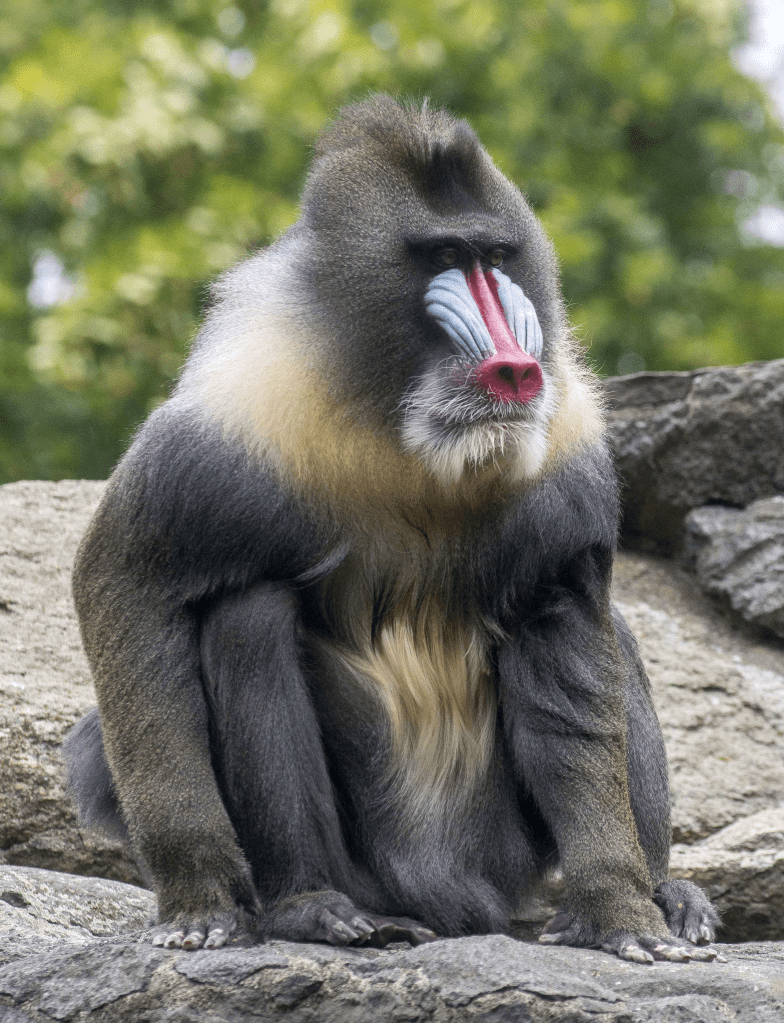
They each have a unique trait associated with them. For example, the Gibbon has the gift of judgement. He can manipulate the course of history by knowing what paths to take. The Six Eared Macaque has a form of omniscience. He has the ability to hear all things and copy the abilities of others. The Stone Monkey has the gift of intelligence, being able to learn and grow. He has the greatest potential out of all four of the monkeys due to having true sentience and the ability to achieve greater understanding of the natural world. The Horse Monkey is the one that confuses me. The Horse Monkey is said to have the knowledge of right and wrong, being a being of conscience. He’s also said to have an understanding of human affairs and is the only one out of the four primates to be truly immortal, for he has the ability to evade death. What strikes me as odd is that Horse Monkeys (Chinese translation for Mandrills) are native to Africa and do not appear in Eastern Asia. And the description of red butt does imply it is indeed an African Mandrill and not an accidental mistranslation of a monkey with the same name. So that means at some point, African Mandrills were introduced to China in or prior to the 16th century in such a manner that someone would reasonably know what a Mandrill was.
 Binder Clip Scorpion
Leave a comment