
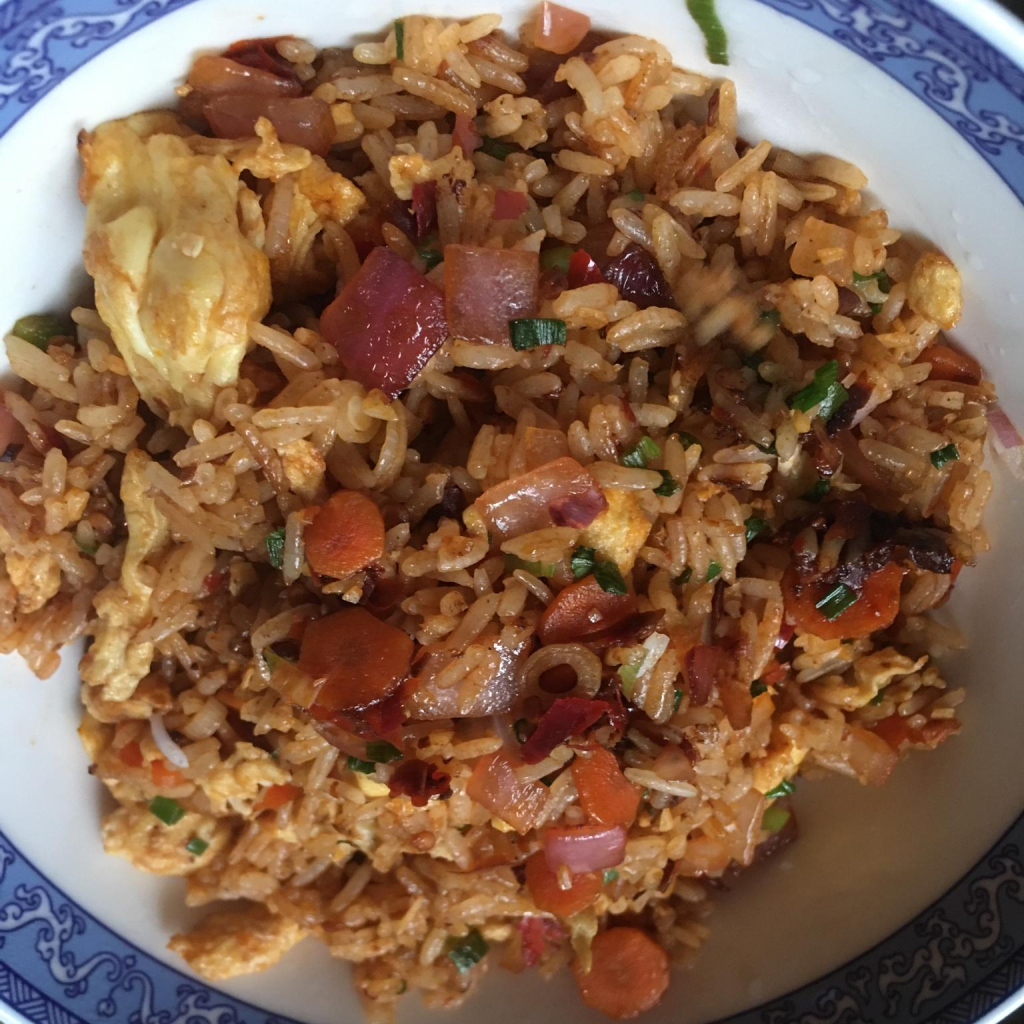
So I promised a friend from work that I would share with him my fried rice recipe. That was a lie… because today I’m gonna be sharing my entire fried rice philosophy! The truth is, fried rice is too broad of a food categorization to have just one recipe. So I’ve decided to create a comprehensive guide to how I approach fried rice, including methodology, potential ingredients, and general personal touches.
So let’s start off with the theory. Fried rice is meant to be a quick and easy meal made with leftovers. The essence of fried rice is low effort but still tasty. This doesn’t mean you can’t go all out and make a deluxe meal out of it. But the point is you should never stress about making the perfect fried rice; think of it more as the leftover rice being your canvas and you paint it with whatever you have in your fridge.
The most simple form of fried rice is egg fried rice, which as the name suggests, is made of egg, frying, and rice. These are what I like to call the base ingredients. Then you have garlic, scallions (green onions), and a salt source (MSG, soy sauce, table salt, etc) which I like to call quintessential ingredients. These 6 things (frying isn’t an ingredient, just pretend I said oil) are necessary for every good fried rice recipe. Don’t ever let me catch you making fried rice without those things. There are rare occasions where there are substitutes for one of the quintessential ingredients (such as another onion plant instead of scallions).
We’ve talked ingredients but what about equipment? Well ideally you want a high heat stove such as a gas stove or an induction stove and a nice non stick pan/wok. Wok over an open fire gas stove is clearly ideal given the nice range of stirring motion. But you can definitely still do what you want to do on a humble small frying pan. Make sure you understand how to handle stir frying on a pan that isn’t non-stick. Having a non-non-stick pan can be a pain as a lot of the ingredients in fried rice will build up a crust on the bottom layer of the pan. Although this isn’t necessarily a bad thing. This is called 锅巴 and it’s quite tasty. Some dishes specifically will do this so you have both the fried rice and then the crispy rice as an add on.
Now let’s talk about flavor. If you are longing for Chinese take out style fried rice or any other fried rice you can get in Western Asian cuisine, the secret ingredient is MSG. I’m not joking. This provides the signature umami flavor that is so addictive and tasty. Now there is no shame in using MSG. But think of it as a crutch. Truly good fried rice will be good even without it. There are many vegetables that naturally contain MSG, such as tomatoes, mushrooms, corn, etc. Most Chinese seasonings and sauces also carry the flavor profile such as fermented bean paste, soy sauce, fish sauce, etc. It’s not particularly difficult to achieve umami if you know what to look out for. But in a pinch, it’s always tempting to just sprinkle MSG and call it a day.
Now when it comes to cooking in general, not just for fried rice, three important things to keep in mind are temperature control, moisture control, and cooking duration. This is especially important to keep in mind for something as variable as fried rice. For example say you want to add tomatoes to your fried rice and create a 番茄炒鸡蛋 style meal. Tomatoes contain a lot of water so you can’t just cook it the same way you would cook diced carrots, which are a lot dryer. Or for example, mushrooms are nearly impossible to burn due to their high chitin content. So they can cook for much longer at high heats to extract their flavor. So you probably shouldn’t throw them into the pan at the same time as something like shallots, which cook really fast.
The general order I like to go in when making fried rice is as follows:
- fry the egg
- remove eggs and cook the protein (optional if you want meat)
add in the vegetables - re-introduce the eggs and add the rice (we’ll talk about the specifics of rice in a moment)
- thoroughly allow all the ingredients to get to know each other before finally adding seasoning and garnishes like green onions and cilantro
Let’s go in order, as I think it’s important to elaborate on all of these steps.
For the perfect egg fit for fried rice, I like to start by turning the heat up to high with a pan with oil in it. This should be a neutral oil such as vegetable oil (corn, peanut, canola, whatever). The goal is to get it super hot, almost to the point of smoking. Do NOT use an aromatic oil such as sesame oil or olive oil. You’ll lose all the flavor anyways and the oil will burn away too quickly. As the oil is heating up, crack your eggs into a bowl and salt them liberally. Beat the eggs until it’s a nice even yellow mixture. by this point if you stick the chopstick you used to beat the eggs into the pan of hot oil, it should instantly start sizzling. If not, let it continue heating. When you reach the proper temp, pour in your eggs and they should cook near instantly. Cooking at such a high temp will help them puffen up and be very airy. This is an ideal texture. Fish them out when the last bit of liquid egg is cooked, don’t let it burn. You can set them aside back into the bowl you used to beat them (don’t worry about the raw egg touching the cooked egg. It’ll all get cooked again anyways). If you like your eggs to be more dense, you can throw them in the oil sooner when it was at a lower temperature and cook for slightly longer.
Now if you want to add meat into your fried rice, we will cook it before adding vegetables. Replenish oil into the pan if necessary. If you have any tasty oils on hand you can use that now as well. I’m talking bacon grease, rendered duck/pig/beef fat, salmon oil, all those tasty heart attack inducing goods. Now the ideal meat for fried rice is sliced very thin into small chunks. This is important for stir frying in general. You get a better surface area to volume ratio when meat is sliced small to maximize flavor absorption. Your choice of chicken, pork, or beef all pretty much work. You can also save time on prep work by choosing ground pork so you don’t need to cut the meat. These can all be seasoned beforehand. I won’t be going into detail about the seasoning for this as that’s a whole topic on its own. But I recommend a sauce mix of soy sauce, chilli powder/ground pepper, cooking wine (shaoxing cooking wine if you have it), and sesame oil. Add sesame oil last as a sort of coating. The layer of oil helps seal the flavor into the meat and prevent moisture loss. Honestly if soy sauce is all you have, that’s completely fine. Meat is plenty flavorful on its own. You can also opt for cooked meats like bacon bits, sausages, ham, etc. Depending on the style of fried rice you’re making they could all work. Because the main flavor profile is dependent on the next section: vegetables.
You can do so much with vegetables beyond boring additions like peas and carrots. You have so many options. Let’s start off with aromatics. Garlic is your best friend. You can choose to chop large chunks and add them in early. Or you can mince them into very small bits and add them in at the very end. Depends on how pronounced you want the flavor to be. Shallots, garlic stems, and ginger are great additions. Let’s talk about vegetables and cook time. Mushrooms, cauliflower, stem vegetables, diced carrots, spicy peppers (chilli, jalapeno, etc.), or tomatoes can be classified as long cook length since they take longer to finish cooking or in general taste better when cooked for long periods of time. Something is considered to be done cooking when it just barely begins to start browning. Medium fast vegetables include bell peppers, shredded cabbages, frozen corn, and other such vegetables. Fast cooking vegetables include leaf vegetables (try to avoid these as they wilt or burn too easily like spinach), onions, bean sprouts, and cilantro. There’s also tons of stuff that might not be considered fresh produce but still work great in fried rice. Soaked 腐竹 known as Fuba, tofu skin, or bean curd makes for a very tasty addition. Pickled mustard greens are a very classic Sichuan vegetable. Bamboo shoots whether fresh or preserved/pickled also add tons of flavor and texture. Take a trip to the local Asian grocery store and ask around. While I do encourage experimentation when it comes to fried rice and putting what you want, I do reckon there are just some foods that probably don’t do too great. Mushy foods like potatoes or pumpkin probably won’t hold up in the pan, or foods that are perfectly edible when raw like lettuce or cucumbers. Basically think of it like this, if you can’t successfully stir fry it, it shouldn’t go in fried rice.
Here’s some combinations that I’ve tried in the past and worked: broccoli stem and cauliflower stem sliced thin along with carrots also sliced thin. Jalapeno and baby bella mushrooms chopped. Triple onion with red onions, white onions, and shallots. Edamame with corn and diced carrots. Straight up chives, like a fuckton of chives. Two vegetables I avoid are peas and celery. Celery sucks and tastes much better as a snack anyways. And I just don’t like peas. I’d rather slice up some chinese snow peas into thin strips and put that in my fried rice. Which is quite good.
At this point after the vegetables and meats have cooked through, add your eggs back in. And finally the star of the show: rice! Now if you’ve ever asked any Asian about fried rice I think the universal common factor is that we all agree you have to use leftover/day-old rice. And for good reason. The reason leftover rice is ideal is because it has had time to dry out, making it less sticky. You won’t have to worry about moisture as much. This allows you to finish cooking without worrying about temperature control, as day-old rice is relatively stable to be cooked at any temperature. I’d say high heat is the way to go. It also stays in line with the essense of fried rice, which is to make a simple meal out of leftovers. If you don’t have leftover rice but you want fried rice NOW you could still use freshly cooked rice. Just let it rest with the lid off after finishing cooking to let time for the steam to escape and cool down. There still are factors that can contribute to the texture and consistency of the rice, but these are attributed to the rice itself. For example, sushi grade rice might not be the best thing to make fried rice with. Or if your rice that you cooked was particularly wet, that’s also not good. So I recommend owning a rice cooker and using plain jasmine white rice. Rice cookers are essentially foolproof and guarantee the rice is as perfect.
So now it is your job to vigorously mix everything together. Your rice should now begin to absorb the flavor of everything that came in the pan before it. Day old cold rice can be clumpy so having a big rounded spatula/wooden spoon is a good tool to have since you can use it to flatten and break apart clumps. Last thing you want is to have clumps of white rice that haven’t actually been properly cooked with the rest of the dish. Now is the time to season. Salt or soy sauce is the easiest approach. Soy sauce adds nice coloring but the flavor doesn’t necessarily match with every fried rice dish. Like a tomato fried rice or a fried rice you had put bacon into. Chinese Chilli oil or Chinese chilli powder are great additions to anyone who can stand the heat. Ground Sichuan peppercorn and white peppercorn are both good in small quantities. Topping off with some toasted black sesame can also help with presentation. If you have any aromatic oils such as sesame oil, now is the acceptable time to put them in. Say you were making a basil based and italian inspired fried rice, a little splash of virgin olive oil would go great. Things like green onions, cilantro, finely minced garlic are all ready to be added now. Adding finely chopped garlic or onions will maintain much more of its flavor this way. They don’t need to cook so long so you can just turn off the stove and let the residual heat finish it off.
And that’s it. That’s fried rice. At least how I like to make it. There’s so many endless possibilities and combos. You just need to find the one fit for you.
 Binder Clip Scorpion
Leave a comment